Body wellness can feel simple again, even if your back has been throwing a tantrum for months.
But here is the annoying truth. If you keep treating your low back like the main character, you might be stuck solving the wrong problem with heroic intensity and very little payoff.
A lot of “low back pain” is actually your low back doing extra work because your hips are not doing enough. When hips lose rotation, extension, or stability, your body still has to move. So the lumbar spine steps in to create motion that was supposed to come from the hip. That is when things get spicy in the least fun way.
Here’s the spine sentence. If your hips cannot move and stabilize, your low back will keep paying the bill.
This post gives you a clean way to test the pattern, then a few mobility and control drills that help restore coordination. You will also learn how to turn those drills into strength work that supports your fitness goals instead of creating a temporary “feel better” moment that disappears by Tuesday afternoon.
If anything you try creates sharp pain, tingling, numbness, or weakness, treat that as a stop sign and get checked by a qualified clinician. Body wellness is about building capacity, not daring your nervous system to a duel.
Body Wellness Self Checks That Often Reveal the Real Problem
Most people start with what hurts. That makes sense emotionally. It also makes you easy to mislead. Pain is loud, but it is not always accurate about where the problem started.
First, check hip rotation with a simple 90 90 sit. Sit on the floor with one leg in front and one leg behind you, both knees bent as close to 90 degrees as you can manage. Keep your chest tall and rotate your torso toward your front shin. Do not force it. Just notice. If one side feels glued down, if you cannot stay upright without collapsing, or if your low back starts helping immediately, you are looking at a hip rotation limitation that can push strain up the chain.
Second, check hip extension, because the classic combo is “tight hips” plus “low back cranky.” Get into a half-kneeling position with one knee down and the other foot in front. Gently tuck your pelvis so your ribs stack over your pelvis, then squeeze the glute on the down-knee side. Now glide forward a few inches. If you feel the stretch in the front of that hip without arching your low back, great. If you can only feel it by dumping into your lumbar spine, your body is borrowing extension from the wrong place.
Third, check single-leg stability, because walking is basically a thousand tiny single-leg reps per day. Stand on one foot for 20 seconds. Your goal is quiet. If your hip drops, your knee caves inward, or your foot is clawing the floor like it is trying to send an SOS, your stability system is working overtime. This matters for strength balance, because a stable hip keeps daily movement clean and keeps your back from becoming the backup stabilizer.
Last, do a quick bridge check for who is actually showing up. Lie on your back, knees bent, feet flat. Exhale, brace gently like you are zipping up snug jeans, and lift your hips a few inches. You should feel glutes and hamstrings. If you mainly feel low back compression, lower down, reset ribs over pelvis, squeeze glutes first, and repeat with a smaller lift. The goal is not height. The goal is control.
Mobility Drills That Help Your Hips Stop Ghosting the Job
Mobility is not about hunting for the most intense stretch and calling it progress. Your nervous system is not impressed by drama. It is impressed by safety, consistency, and controlled range.
Start with 90 90 switches. Sit in the 90 90 position again. Without leaning back or using your hands as much as possible, slowly switch your knees to the other side. Keep the movement small if you need to. The win here is smooth, not heroic. When you move slowly, you can actually feel where you compensate, and that is the doorway to changing it.
Next, return to the half-kneeling hip flexor opener, but do it like you mean it. Ribs stacked over pelvis, glute squeeze on the kneeling side, then a slow glide forward. Hold for a couple of calm breaths, come out, and repeat. If you feel pinching in the front of the hip, reduce the range and increase the glute squeeze. You are teaching hip extension without lumbar borrowing.
Now add a hinge reset, because a lot of people think they are moving at the hip when they are actually folding through the low back. Stand with feet about hip width, soften your knees, and send your hips back like you are closing a car door with your butt. Keep your spine long and your ribs quiet. You should feel hamstrings load. If you feel your low back take over, shorten the range and focus on the hip crease moving back.
Finish with a supported hip airplane. Stand near a wall or countertop for balance. Hinge slightly on one leg, then slowly rotate your pelvis open a few inches and closed a few inches while keeping your standing knee stable. This looks unimpressive. That is fine. The point is motor control. If you wobble like a baby giraffe, congratulations, you found the edge of your current control. Stay there and earn it.
Strength Balance That Makes the Changes Stick Past Today
If mobility is the invitation, strength is the RSVP. If you open new range but cannot control it, your body will not trust you with it, and it will tighten back up as soon as you look away.
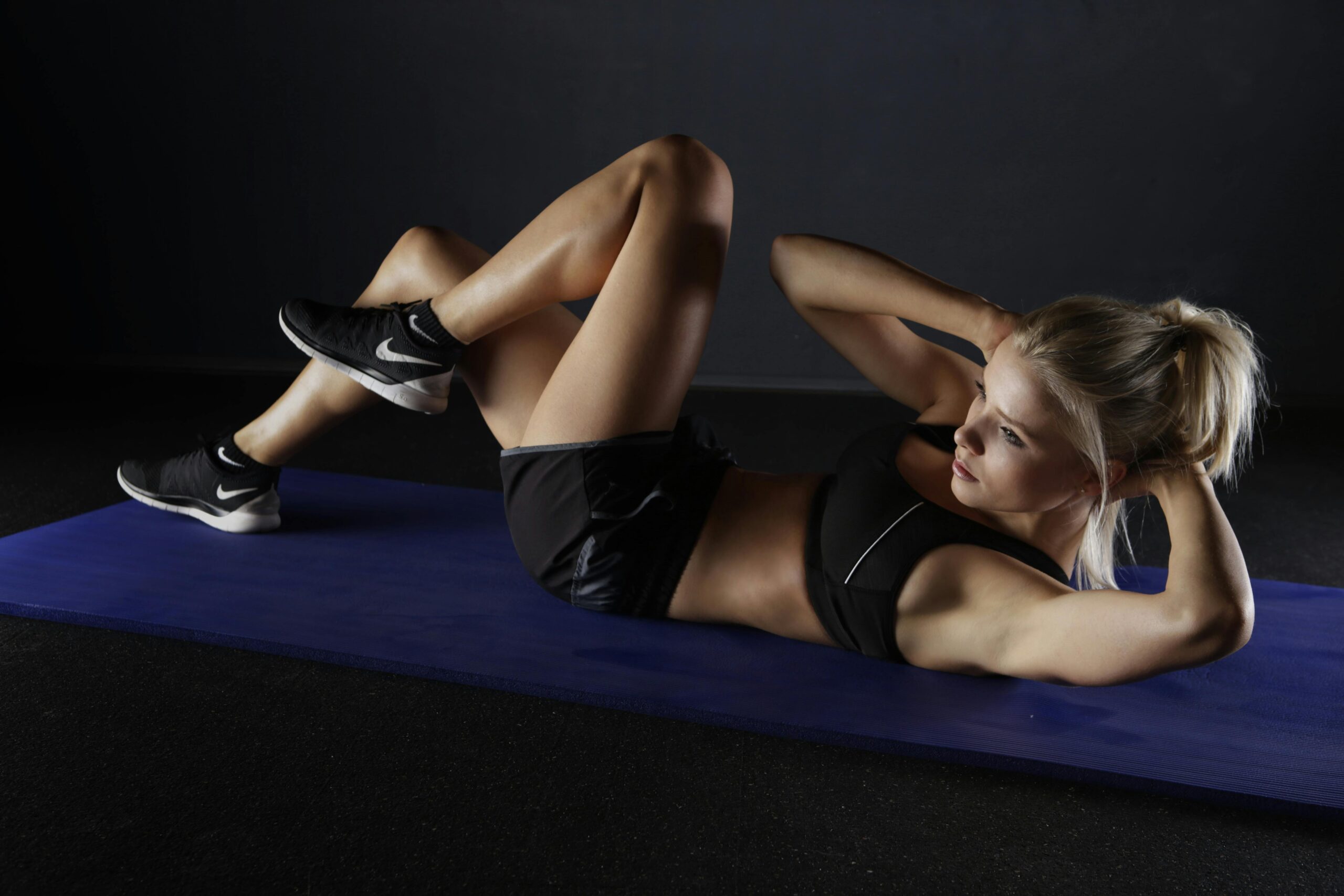
Begin with a trunk control drill that keeps your spine quiet while your hips move. A dead bug variation works well. Lie on your back, hips and knees bent, arms up. Exhale, gently brace, then slowly extend one leg and the opposite arm. Stop before your low back arches or your ribs flare. Return and switch sides. You are building the kind of quiet core control that protects your back while your hips do their job.
Then train hip extension with intent. Start with a glute bridge, but make it a quality rep. Exhale, ribs down, squeeze glutes, lift only as high as you can without arching. Add a two-second pause at the top, then lower slowly. If that feels solid, progress to a single-leg bridge or a hip thrust depending on your setup and comfort. The progression matters less than the rule: hips extend, spine stays calm.
Next, train lateral hip strength because many “back issues” show up when the pelvis cannot stay level in single-leg support. Side steps with a band, a side plank variation, or controlled step-downs can all work. Do not rush. Your knee should track cleanly, your pelvis should stay level, and your foot should feel grounded rather than frantic. This is strength balance in real life, not just in the gym mirror.
Finally, reintroduce loaded hip hinging, slowly. A light Romanian deadlift pattern, a kettlebell deadlift from an elevated surface, or a dumbbell hinge can be great once you can keep the movement in the hips. Think of it as teaching your body a new default, not testing your toughness. Toughness is easy. Precision is the skill.
If you want a simple rhythm that supports fitness goals without turning your week into a second job, aim for two or three strength sessions per week and five minutes of mobility on the days you sit more. That is a sustainable wellness workout plan. It fits inside real life, and it gives your body enough repetition to actually adapt.
Body Wellness Next Steps That Turn Insight Into Momentum
You do not need a thousand exercises. You need the right few, done consistently, with progression that matches your life.
Use the self-checks once per week for the next month. Treat them like a dashboard, not a judgment. Use the mobility drills as a warm-up, then anchor the change with strength work. Most people notice the payoff in regular moments: standing up from the car without bracing, walking without that tuggy sensation, finishing the day feeling more steady instead of wrung out. That is body wellness, the version that shows up where you actually live.
If you want this addressed in a structured way, with a plan that evolves as you improve, head to my custom workout plan and get into a system that matches your needs. If you want direct coaching and feedback, my personal training plan is the next step. Drop a comment with which self-check lit up like a neon sign for you, and if you know someone who keeps blaming their back while their hips quietly refuse to cooperate, send this their way.